
Inverlonan launches new landscape hotel & restaurant on the west coast of Scotland
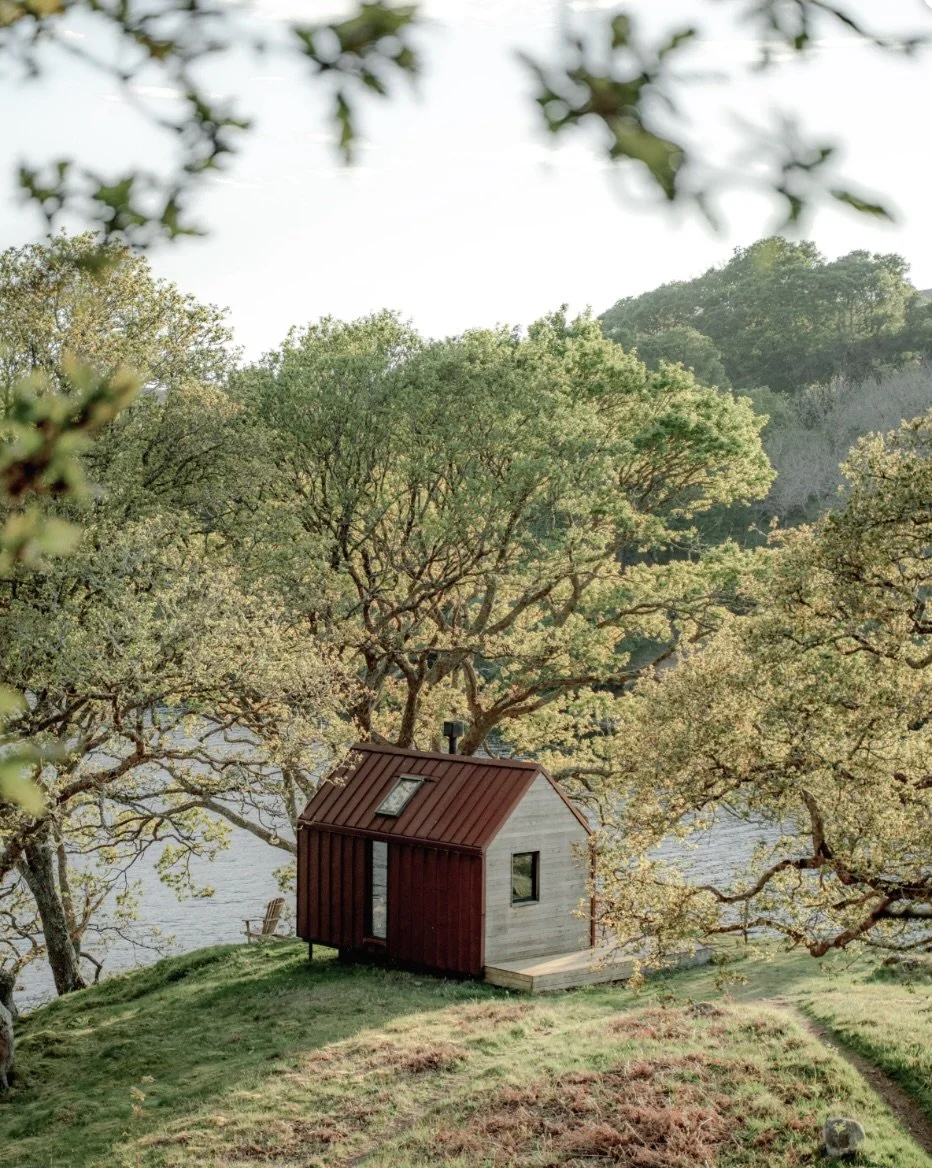
Following the success of its three acclaimed off-grid bothies on Loch Nell, Inverlonan is transforming the historic farm at its heart into a unique nine-bedroom landscape hotel and 24-cover restaurant.
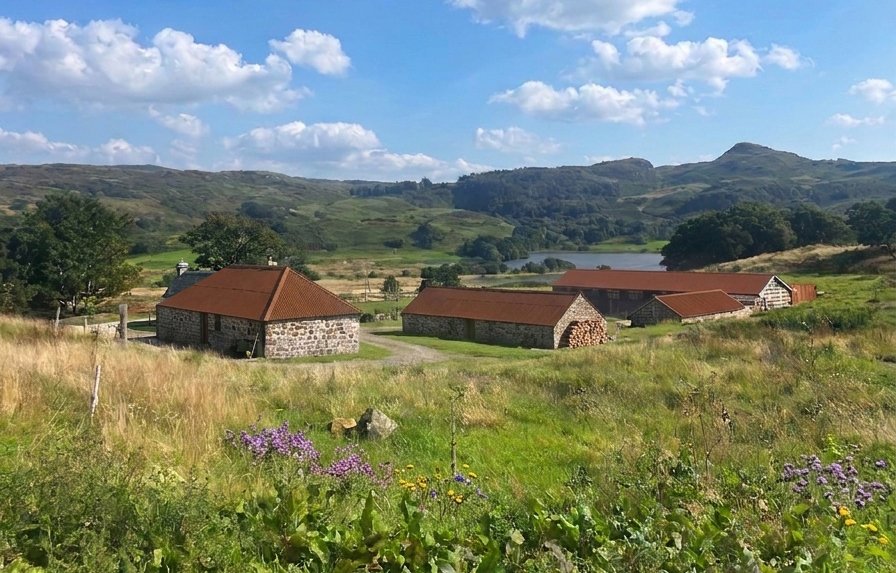
Image is CGI
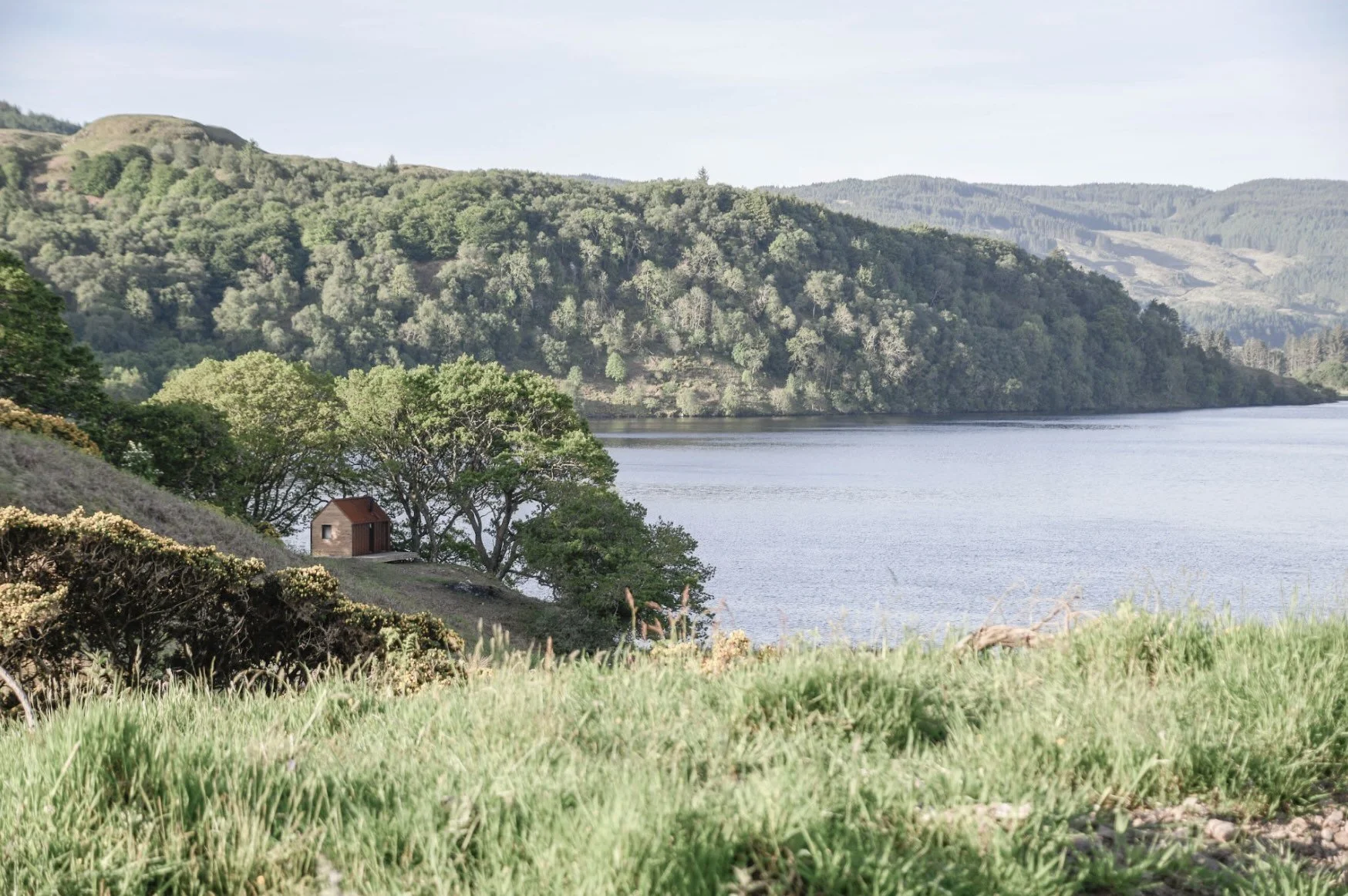
On the shores of Loch Nell, four miles east of Oban, Inverlonan is already known for its three acclaimed off-grid bothies, set within 1,000 acres of working farmland and opened in 2020 as a luxury reimagining of the traditional Scottish bothy. Now, Inverlonan is embarking on its next big chapter: restoring the historic Ballygowan Farm at the heart of the farm to create a unique nine-bedroom hotel and restaurant, opening in November 2026.
The concept is to bring the spirit of the bothies into the steading; creating somewhere with hotel comforts but the same unambiguous connection to the landscape. The hotel will be shaped by its Scottish roots - its landscape, food, farming, materials and makers.
The design: “of the hill”
Inverlonan sits at the mouth of Glen Lonan, where the River Lonan meets Loch Nell, with views east towards Ben Cruachan and Glen Orchy, north to Glen Coe and Ben Nevis, and west towards Mull. This landscape has informed almost every decision behind the new hotel.
Rather than replacing the farm’s collection of old stone buildings, Inverlonan is meticulously restoring and adapting them, working closely with architect Kirsten Mackenzie, formerly of RMJM, where her work included conservation and refurbishment projects at Trongate Theatre and the Scottish Parliament. The original farmhouse will become home to three bedrooms - Moth, Crab and Red Zebra - while a further five rooms - Earth, Straw, Moss, Clay and Sun – will sit within the former Byre. A fully restored 16th-century stone bothy, the Blackhouse, will become a standalone suite.
Each bedroom will have a super-king bed and en-suite bathroom, with three of the Byre rooms featuring stone baths alongside limecrete wet rooms. Each room will come with a hand coffee grinder and beans, kettle and teas. Glencraft mattresses and duck down duvets and Piglet in Bed linen will complete the beds. Moth and Crab in the Farmhouse will also have additional bed decks for children, with the Farmhouse sleeping up to ten when taken exclusively.
The design follows Inverlonan’s guiding principle, “of the hill”: architecture that respects and complements the existing Scottish vernacular and is firmly embedded in its surroundings. Original stone and lime walls, press cupboards and period features are retained alongside additions in oak, corten, zinc, copper, oak and shu sugi ban. Materials include hemp insulation, wood fibre board and lime plaster throughout; Caithness flagstones from Norse Stone; lime paints from local producer Fudar; local olive ash, wych elm and oak worked by local craftsman Michael Acey; distinctive clay walls from Clayworks in each of the five Byre bedrooms: and underfloor heating sourced from the hill through 3 boreholes and a pair of geothermal heat-pumps.
There is a clear Scottish identity without relying on the obvious shorthand. Artwork will span young Scottish and local artists alongside works by John Bellany and Allan Davie, and 1970s kinetic art pieces; marquetry commissions come from Woodpop; lighting from Orfeo Quagliata: handmade wallpapers from The Paper Foundation and Timorous Beasties; rugs and blankets from Inverlonan’s organic wool; and baskets handwoven from local willow by Calltain Croft on Mull. Ceramics include works by Mike Dodd, Philip Cornelius and Geraldine Philips, with bespoke crockery commissions from Argyll Pottery and former chef Michael Thompson. Recovered metal from the farm will also be transformed into sculpture by Scottish artist Ruaridh Litster-Campbell.
The restaurant: from farm, hill & sea to plate
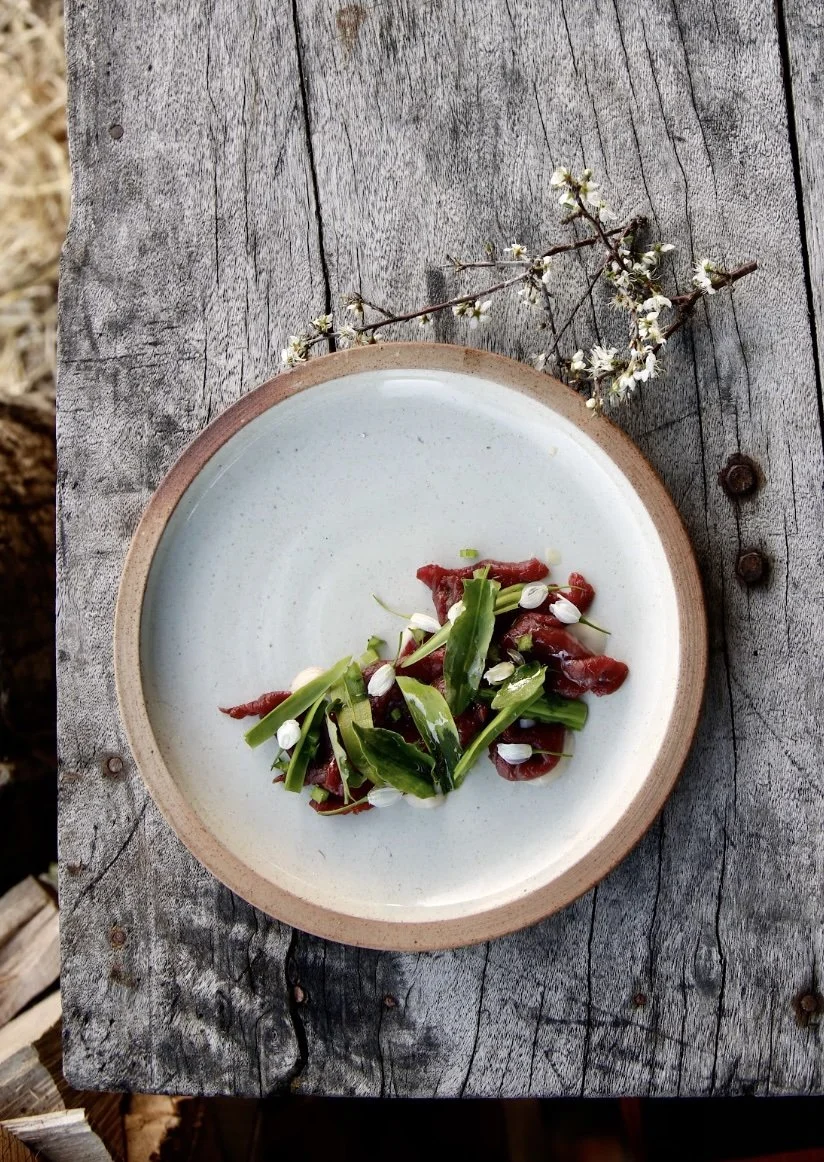
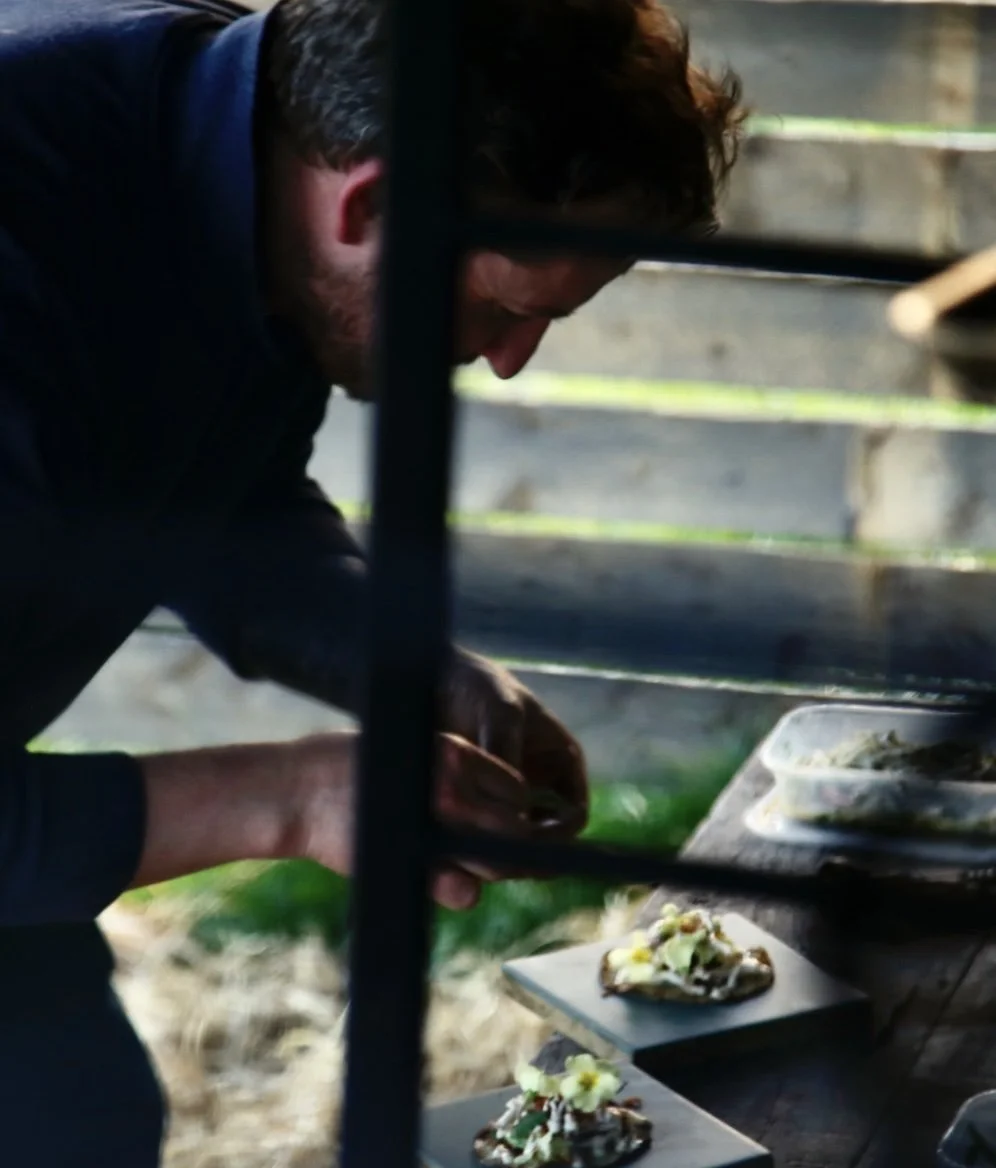
Food is already a central part of the Inverlonan experience. Alongside the bothies, chef Tim Kensett has built an acclaimed Wild Dining experience, serving an eight-course menu cooked over open fire for both guests and visitors in a secret location on the estate. It is considered one of Scotland’s most unique dining experiences.
The new restaurant is the next evolution of this story. Tim, whose career includes five years at The River Cafe as well as Storico in New York, GoldenEye in Jamaica, The Star at Alfriston and The Fife Arms in Braemar, will move into a new 24-cover, open-plan wood-fire restaurant within the restored steading with bespoke dining tables from local slabs of burr oak crafted by Michael Acey; ‘undulation’ lighting by Orfeo Quagliata; antique brass wall candle sconces; handcrafted copper counters.
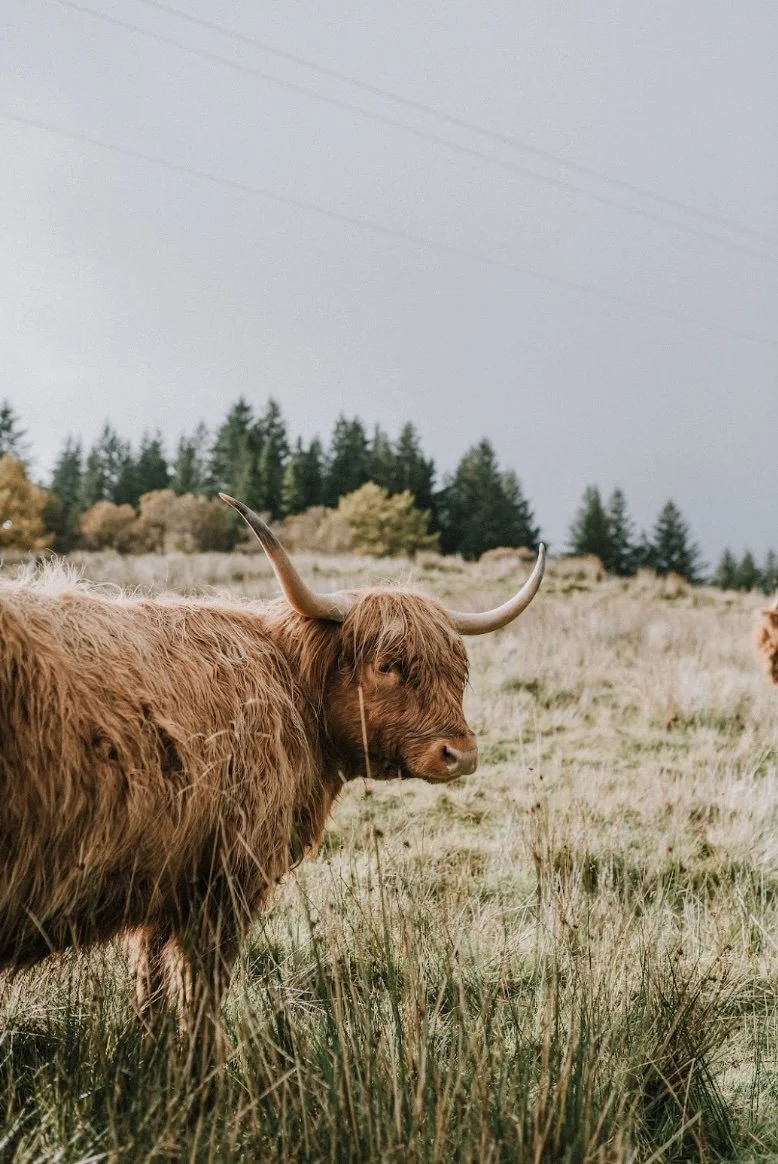
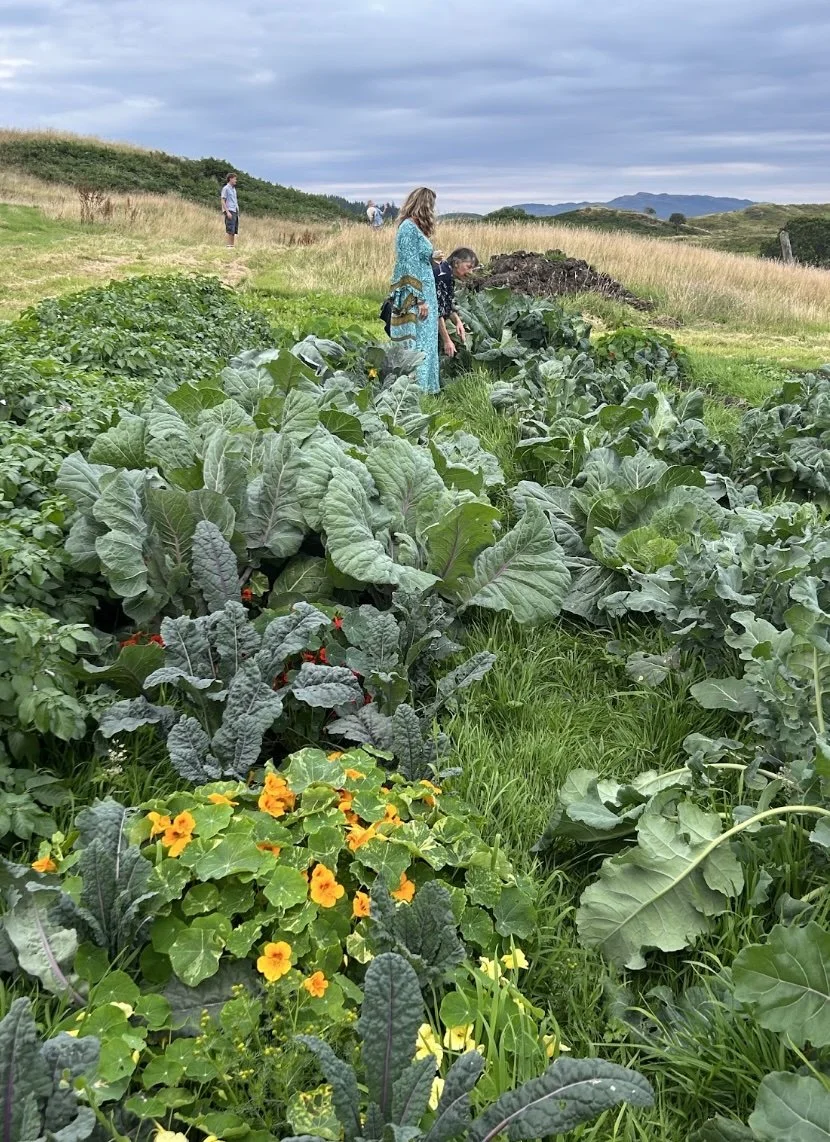
Dinner will remain a single sitting at 7pm, with an eight-course menu described simply as “of the hill”. More than 90% of what appears on the plate will come either from Inverlonan itself - its farm, hill, market garden and forage - or from Scotland’s west coast waters. Expect Inverlonan’s own grass-fed Luing cattle and native-breed sheep, vegetables, fruit, herbs and honey from the farm, alongside hand-dived scallops, creel-caught prawns, Loch Creran oysters and Kames trout.
Inverlonan is not simply a hotel with a kitchen garden attached, but rather a working farm where the hotel and restaurant are directly connected to the produce of the land. From 10 September 2026, the land will be certified organic by the Scottish Organic Producers Association (SOPA), following a three-year conversion process, with all livestock sold from that date certified organic. Its market garden is also expanding to supply the restaurant, alongside 150 fruit trees and eight producing beehives.
The stay: living with the land
The three original bothies remain very much part of Inverlonan and will continue operating as before: off-grid, immersive and embedded in raw nature. The new rooms will offer all the comforts of a hotel, but the experience remains intentionally immersive and informal.
Breakfast will bring together local smoked trout, cheeses and charcuterie with handmade Inverlonan breads, yoghurt, compote, honey and kombucha, alongside communal stations where guests can cook their own hot breakfast. At lunch, there might be soup and bread, salad or salt-baked trout in the restaurant; alternatively, guests can take an Inverlonan BBQ box and cook over fire at dedicated cooking stations around the courtyard, beach and woodland.
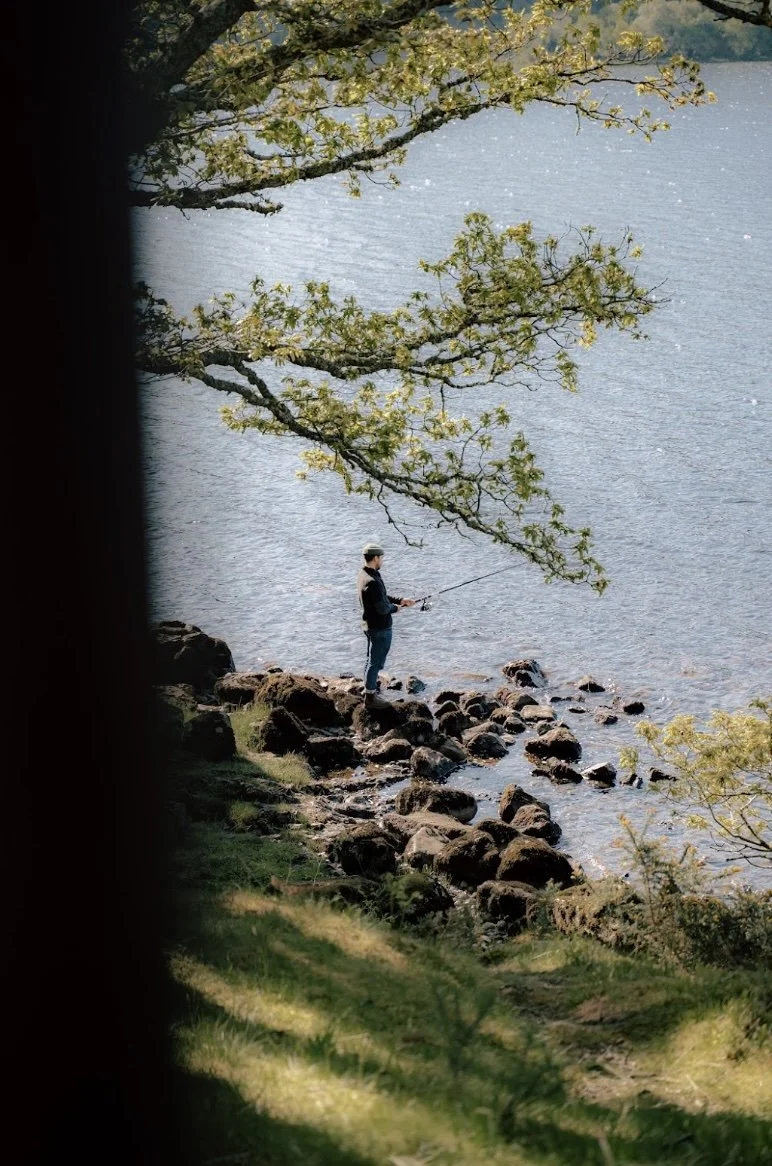
Honesty bars, a larder and in-room Yeti boxes stocked with provisions will replace the conventional minibar, while down at Loch Nell there will be wild swimming and a communal sauna on the beach. Kayaks, canoes, paddleboards and fishing rods will be available for guests to use, with fishing on Loch Nell, the River Lonan and Lochan Barr a’ Claighinn - all included in the night rate. Electric bikes can take guests further into Glen Lonan, while rough walking tracks lead directly from the farm and through Inverlonan’s woodland. The emphasis is on giving guests the freedom to use the estate rather than programming every hour of their stay.
Inverlonan will also be available for exclusive-use hire, sleeping up to 30, on a fully serviced basis - or as required.
The bigger picture: 1,000 acres of regenerative farming
The hotel forms part of a much bigger story at Inverlonan. The 1,000-acre working farm combines regenerative farming and food production with a long-term programme of ecological restoration and biodiversity enhancement.
In 2018, 190,000 broadleaf trees - predominantly oak, beech and birch - were planted across 220 acres of Ballygowan Hill, with public access encouraged throughout. Black grouse have returned and now lek in the woodland, while hen harriers, white-tailed sea eagles, merlins and red-throated divers are found in the immediate area. Inverlonan also sits within a Golden Eagle range.
Its human history reaches considerably further back. The Strontoiller Stone Circle, dating to around 2000BC, and the 13-foot Clach na Caraig standing stone - or Diarmid’s Pillar – sit on Inverlonan. Glen Lonan itself is rich in mythology and archaeological remains, with ancient burial grounds and hill forts scattered across the landscape.
The new Inverlonan is intended to be as much about the land as the hotel itself: a Scottish experience shaped by its surroundings, from what guests eat and drink to the materials, makers and landscape they encounter.
Inverlonan landscape hotel and restaurant will open in November 2026.
Rooms from £360 per night including breakfast | The Blackhouse from £425 per night | Bothies from £290 per night, minimum two-night stay | Dinner at Inverlonan: £110 per person for eight courses.
For all PR enquiries please email jessy@jessyharrisonpr.com